
Learning to learn is one of the cornerstones of education in this new century. Universities employ two different approaches to train or prepare students to take charge of their own learning process as an overarching aim of their education: the first involves including specific modules in the curriculum to teach students techniques for learning to learn and to develop the necessary skills, whilst the other approach incorporates the development of these skills into the learning objectives of the various modules.
Origins of AngoSAP: An Inspiring Collaboration
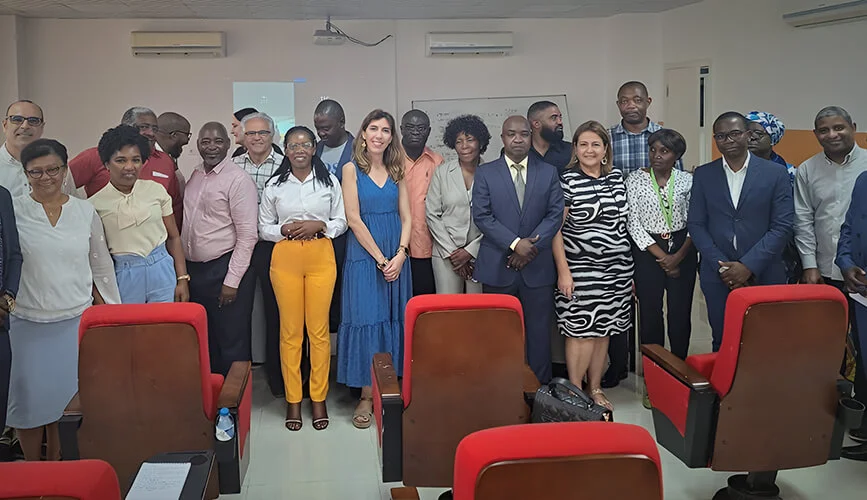
AngoSAP emerged from an intense collaboration between research teams from the Óscar Ribas University in Angola and the University of Cádiz in Spain. It was a decisive joint effort to design a project that would be of interest to the evaluators of the Erasmus+ programme.

Dr Juan Silvio Cabrera, through his personal contact with Dr José Ignacio Navarro, managed to establish a link with the University of Cádiz. In this initial stage, the work team was characterised by a collaborative, group learning and continuous improvement approach. The ties between the specialists of the Psychological and Psychopedagogical Care Service of the UCA were strengthened, such as Dr Cristina Senin, Dr Álvaro Rodríguez Mora and Dr María Dolores Gómez Domínguez, who responded to Dr Navarro's call.
On behalf of Óscar Ribas University, the efforts of Doctors Inidia Rubio Vargas, Juan Abreu Payrol, Yosvany Pedroso González, and Arnaldo Faustino were joined. Together with Dr. Juan Silvio, they worked arduously for two months to submit the proposal to the Erasmus+ platform in February 2023. After a productive and encouraging wait, in August 2023 the project was definitively approved, celebrating this significant initial achievement.
In the months that followed, the team was expanded with the inclusion of collaborators from the Faculty of Social Sciences of RheinMain University of Applied Sciences and the other members of the Angolan consortium: Namibe University, Lueji A’Nkonde University, and the Higher Pedagogical School of Bié. During this period, the project was refined, suggested modifications were incorporated, and final approval was obtained, culminating in the signing of the agreement.
All of this background has been fundamental in ensuring the achievement of the work team's goals and lays the foundations for new experiences in the field of psychological and psychopedagogical diagnosis and guidance for students at Angolan universities. We are the continuation of this inspiring collaborative effort!